My grandmother worked at the Hershey factory in Nova Scotia. My mother and her sister are chocolate fanatics. And me? I was the girl nobody bothered buying Valentine’s chocolate for, because I just didn’t care. I wouldn’t put it in my shopping cart, and a sale on chocolate meant nothing to me. People would ask, “What girl doesn’t like chocolate?” Me.
Then I turned 40, and chocolate started to look different and taste different. Now it lives in my house. So when I set out to make the best brownie of my life, I did it the way a late convert does: all in.
In my family, the kids get the bowl and the spoon when we’re making brownies, cupcakes, or cake. My son got so full on the liquid chocolate before it ever went in the oven that I didn’t even see his first bite. Mine, I saw. I ate. I conquered. I was astonished. It was fudgy and chocolatey without being overpowering, with every kind of chocolate in there and none of them fighting each other.
And I almost ruined it. I had poured everything into the pan before I realized I’d forgotten the vanilla and the salt. So I scraped it all back into the bowl, mixed them in, and poured it in again. It still came out perfect.
Can I use margarine instead of butter?
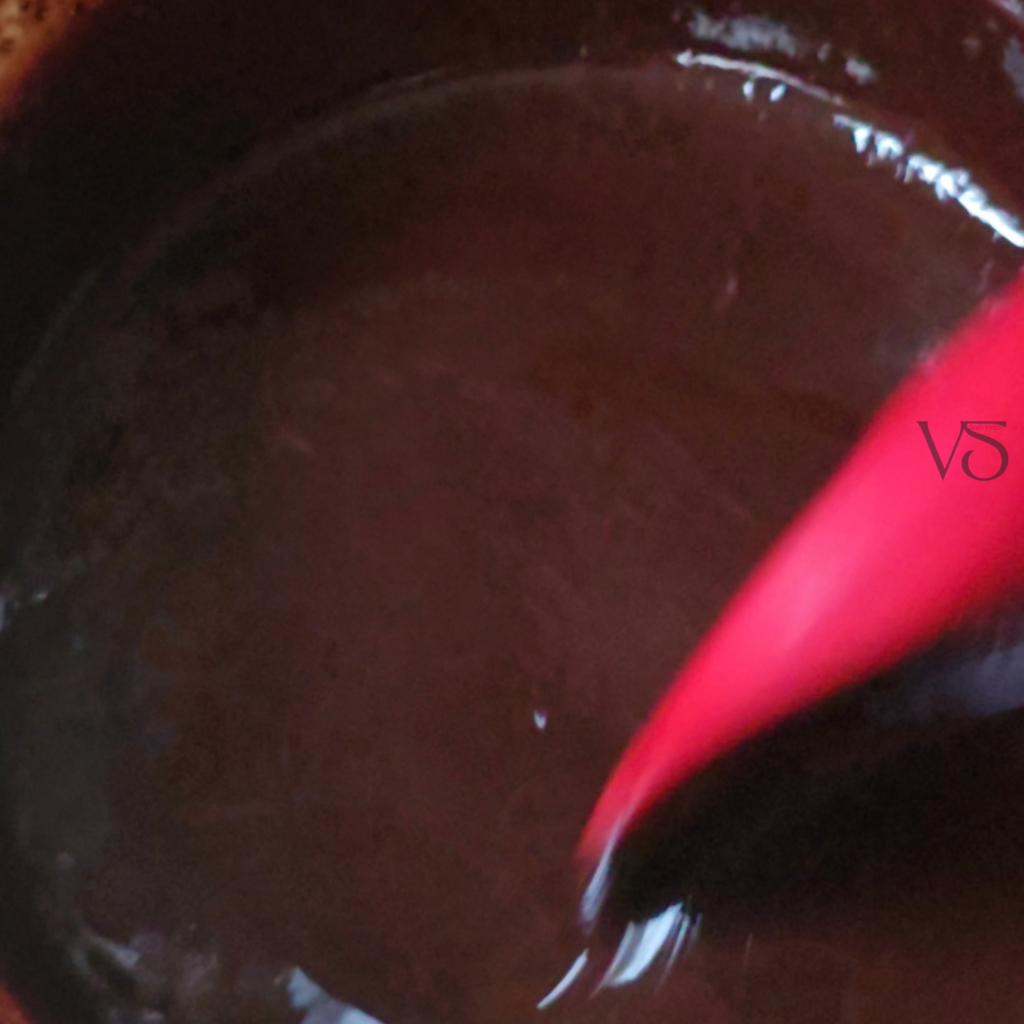
Yes. I’ve made this recipe with both, and honestly, I can’t taste the difference. Butter tastes like butter and margarine tastes like margarine, but it won’t ruin your brownies. If butter isn’t in the budget this week, use what you have. The one rule is that whichever you choose, it must be browned. Not burnt. Browned.
What Makes a Brownie Fudgy?
Fudgy versus cakey comes down to one thing: how much fat there is compared to flour. A cakey brownie has more flour and usually baking powder, so it rises and gets light and crumbly. A fudgy brownie has lots of fat, very little flour, and no baking powder at all, so it stays dense, moist, and almost like a truffle. That’s exactly how this recipe is built: a full stick and a half of fat, only ¾ cup of flour, nothing to make it rise, and an extra egg yolk to push it even richer.
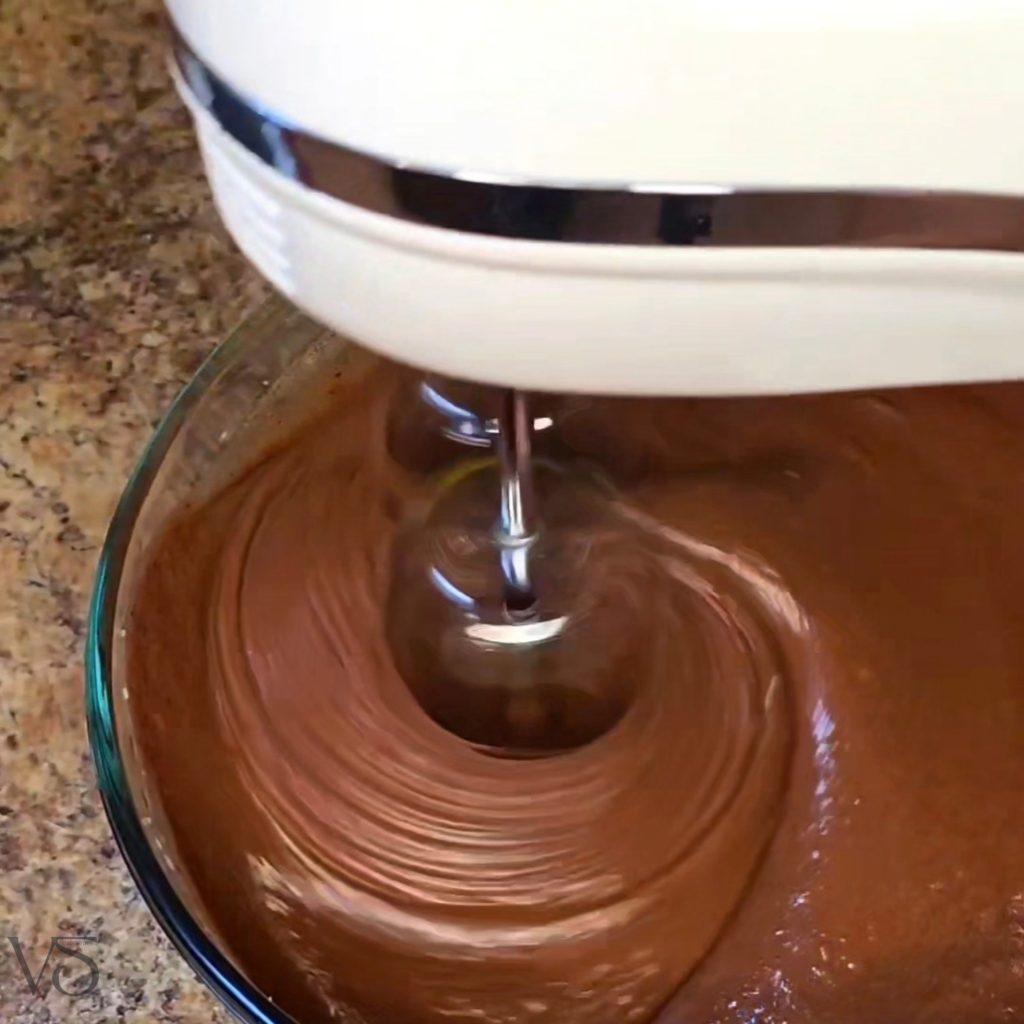
The second secret is not overbaking. A brownie keeps cooking from the heat of the pan after it comes out, so if the center looks done in the oven, it’ll be dry by the time it cools. I baked mine at 350°F for 22 minutes, and that was perfect. Don’t go past 22.
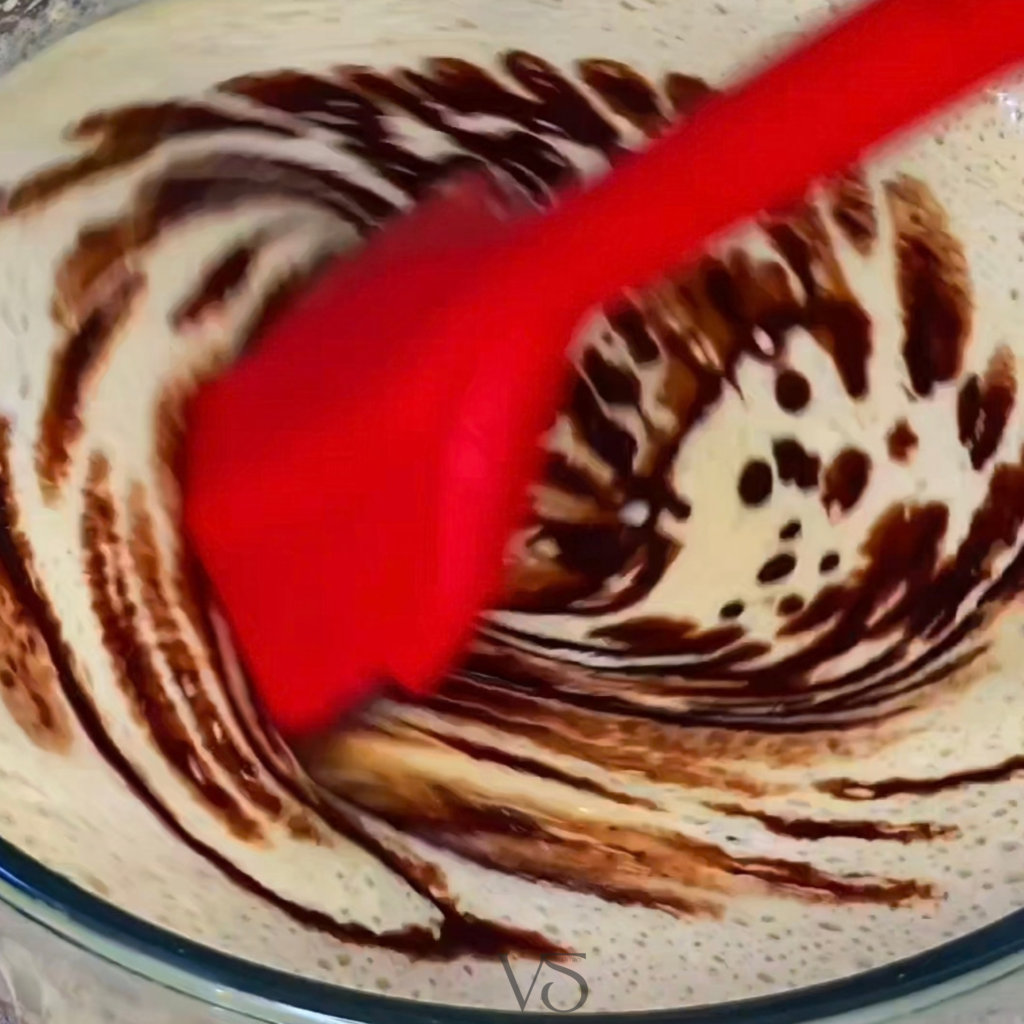
Why Each Ingredient Is There
Brown butter (or margarine) is the backbone of the flavor. Butter is mostly fat, with some water and a small amount of milk solids. When you cook it slowly, the water steams off and the milk solids toast, which is where the nutty, caramel smell comes from. My margarine browned in the pan too. Whichever you use, take it off the heat as soon as you see deep amber and toasted flecks on the bottom. It goes from browned to burnt in seconds, and burnt tastes bitter.
Cocoa powder is what’s left of the cocoa bean after most of the cocoa butter has been pressed out, which is why it’s so concentrated and so dark. Its flavor compounds dissolve into fat and heat helps release them, so stirring it into the hot browned fat blooms it. That’s the difference between a flat chocolate taste and a deep one.
Espresso powder doesn’t make these taste like coffee. Coffee and chocolate share roasted, slightly bitter notes, so a little espresso amplifies the chocolate. I believe the espresso is what gave these their extra deep, fudgy chocolate taste, and I don’t think they’d taste as good without it.
Hot chocolate powder was a “why not” moment. I added it with no master plan. It’s mostly sugar and cocoa, often with some milk solids, so it adds a creamy, milk-chocolate sweetness in the background. If you don’t have it, your brownies will still taste good, but they wouldn’t be exactly my brownies.
Eggs and the extra yolk give the brownies structure, and the yolk adds fat and a natural emulsifier called lecithin that binds the fat and liquid together. That’s the secret to a dense, moist crumb. One extra yolk is the sweet spot. I add one to almost everything, and more than that starts to taste eggy.
Vanilla doesn’t add its own flavor so much as it rounds off the others. It makes chocolate taste smoother and more complete. I nearly forgot it, which is a good reminder of how much a brownie without it would be missing.
Flour is kept low on purpose. And fold it in only until you don’t see dry streaks. The more you mix, the more gluten develops, and gluten is what makes brownies chewy and tough instead of tender.
Kosher salt does more than season. Salt suppresses bitterness and makes sweet things taste more like themselves, so the chocolate tastes more chocolatey, not just sweeter. With this much sugar, it’s what keeps the brownie from tasting flat.
Milk chocolate is softer and sweeter than dark because it has more milk solids and sugar and less cocoa. Cocoa butter, the fat in chocolate, melts right around body temperature, which is why chocolate melts in your mouth. Chopped into chunks, milk chocolate melts into soft, gooey pockets inside the brownie instead of holding its shape like chips do.
White chocolate is the surprise. It’s made from cocoa butter, sugar, and milk, with none of the cocoa solids that make chocolate dark. That’s why it tastes creamy and caramel-like, not bitter. A small handful adds a third chocolate flavor without making the pan too sweet.
Do Brownies Have to Crack on Top?
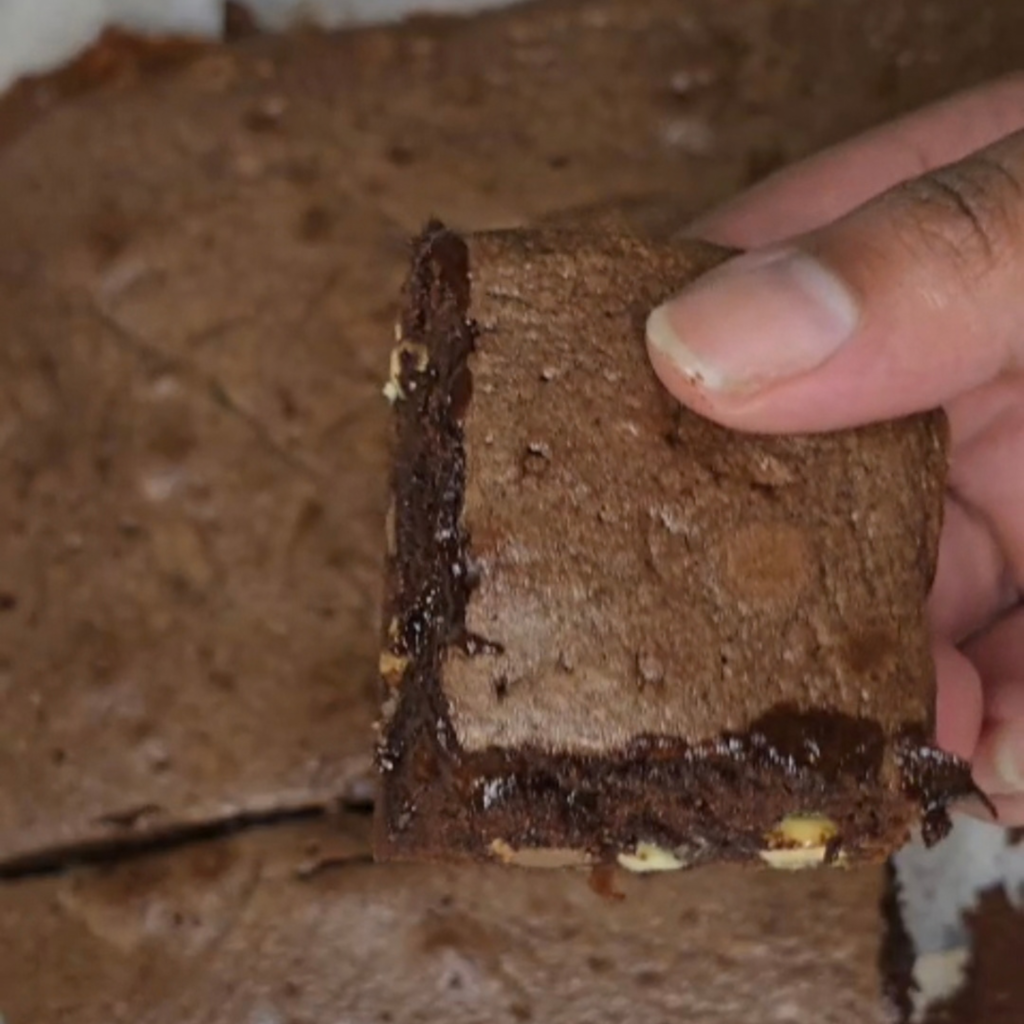
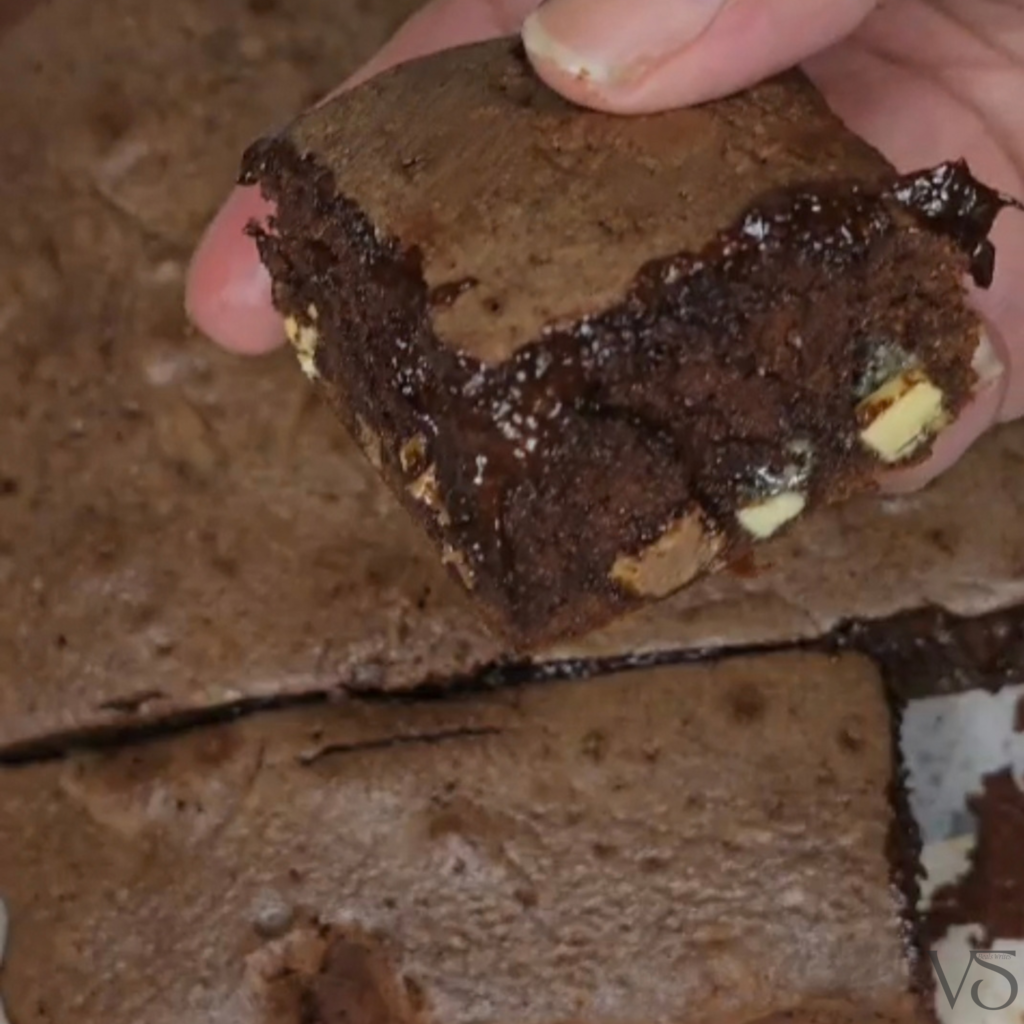
Mine didn’t, much. That shiny, crackly top comes from sugar dissolving into well-beaten eggs and forming a thin crust, and it has nothing to do with how fudgy the inside is. Mine weren’t crackly and they were still the fudgiest, moistest brownies I’ve ever had, and that’s not me being biased.
Why 16 Small Squares
I cut these into 16 on purpose. They’re rich and sugary, and I didn’t want me and my son with a pan full of big brownies. Two squares a day is plenty. If you want 12 bigger ones, cut them that way.
Why I Froze the Chocolate First
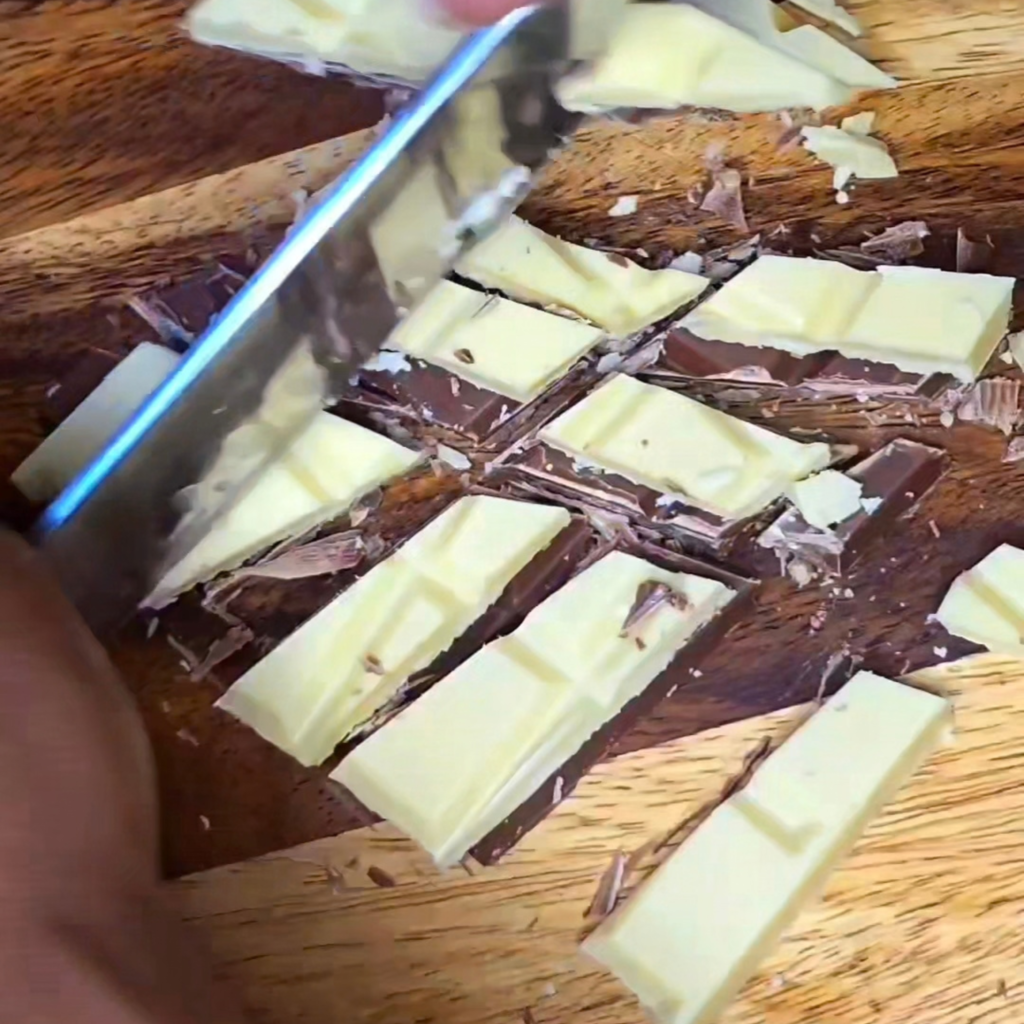
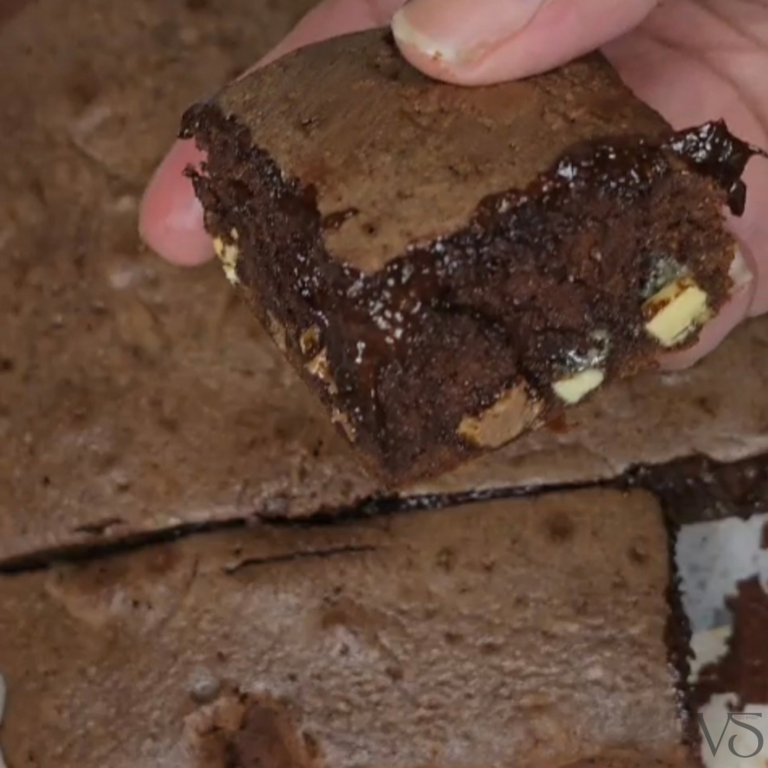
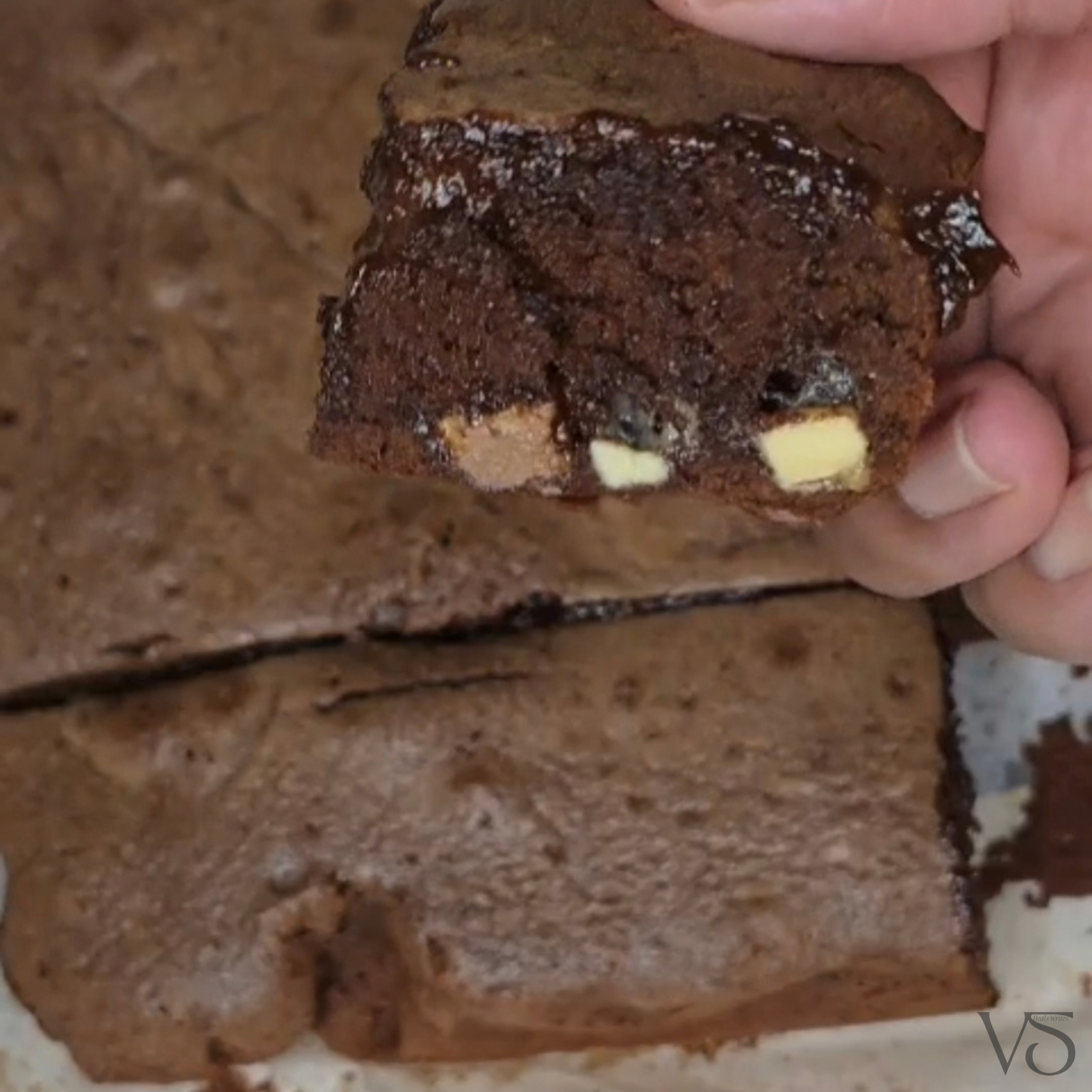
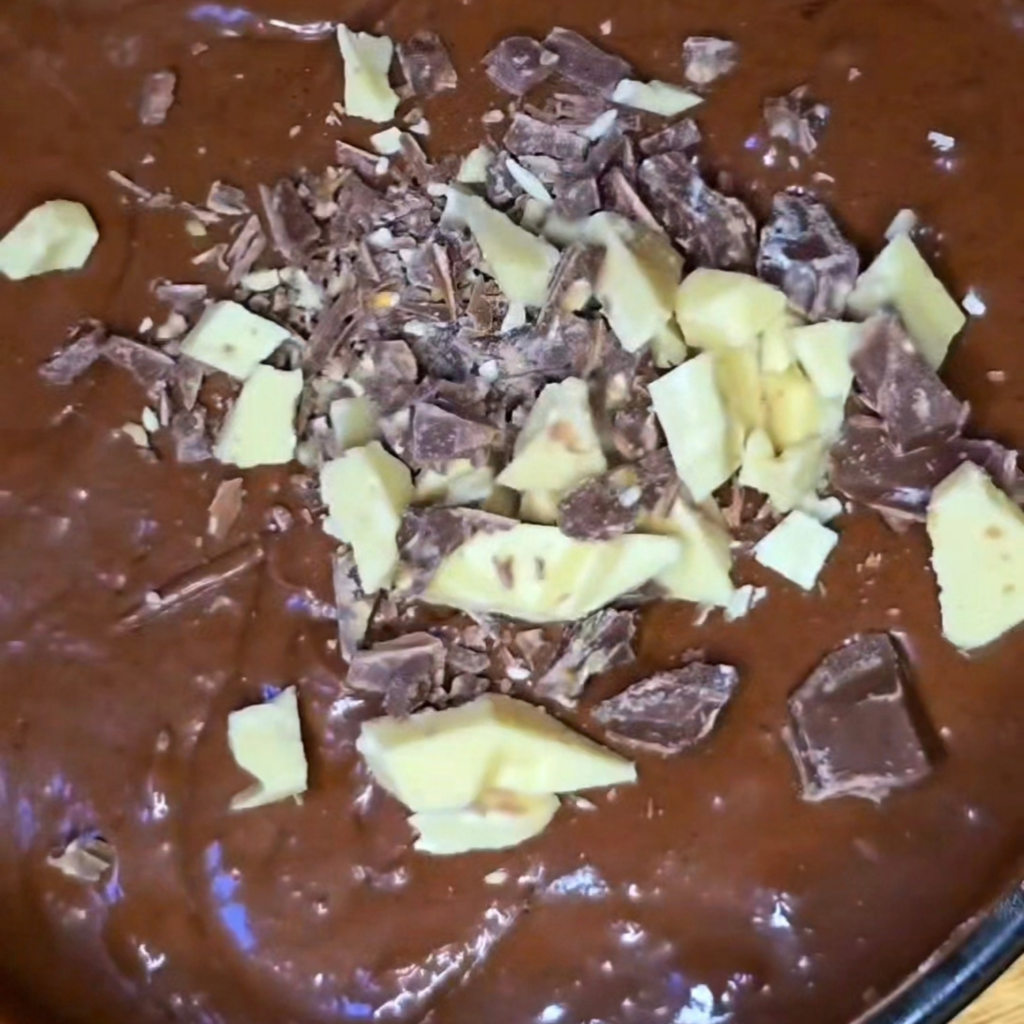
Look closely at the photos and you’ll see solid chunks of milk chocolate and white chocolate sitting inside the brownie. That’s not an accident. I froze both chocolate bars before I chopped them, then folded them into the batter still frozen. Cold chocolate takes much longer to melt, so in the oven the chunks held their shape instead of dissolving into the batter. Skip this step and your brownies won’t look like mine. You’ll still get chocolate flavor, but you’ll lose those distinct pockets.
Ingredients
Method
- Before you begin freeze the chocolate bars for at least 15 minutes and do not remove them until it is time to chop them up.
- Heat the butter or margarine in a light-colored pan over low heat until deep amber with toasted flecks. Take it off the heat right away. Browned, not burnt.
- Stir the cocoa, espresso powder, and hot chocolate powder into the hot fat.
- In a large bowl, whisk the eggs, extra yolk, brown sugar, and vanilla until thick and combined.
- Stir in the cocoa mixture. Fold in the flour and kosher salt just until combined.
- Fold in the milk chocolate and white chocolate.
- Pour into a square pan and bake at 350°F for 22 minutes. Don’t overbake.
- Sprinkle with flaky salt right after baking. Cut warm for gooey centers, or chill first for clean squares.
Notes
Nutrition Facts (estimated)
Makes 16 squares| Per square (1 of 16) | Whole pan (all 16) | |
|---|---|---|
| Calories | 288 | 4,610 |
| Total fat | 14 g | 231 g |
| Saturated fat | 9 g | 137 g |
| Cholesterol | 72 mg | 1,155 mg |
| Sodium | 141 mg | 2,255 mg |
| Total carbohydrates | 38 g | 613 g |
| Fiber | 2 g | 30 g |
| Sugar | 30 g | 485 g |
| Protein | 4 g | 60 g |
A Pinch of Scripture
Some things you only understand once you’ve tasted them yourself.
O taste and see that the LORD is good: blessed is the man that trusteth in him. — Psalm 34:8
For most of my life, chocolate wasn’t for me, and no amount of people telling me how good it was would change that. Then one day my taste changed, and I couldn’t believe I’d gone so long without it. The Lord works the same way. People can describe His goodness to you for years, but at some point you have to taste it for yourself. Come hungry.
Stay faithful, stay seasoned, and stay loyal.
With love and fire,
V.S. Beals, Servant. Disciple. Woman of the Word.
Read last week’s article