Today is Truth and Reconciliation Day, and it is the one day of the year I make bannock. With everything I have going on, it is always a treat for me.
Bannock day looks the same as every other cooking day in my house. Here is what you don’t see on camera. The corner in my photos is neat because it has to be photo and video ready for Instagram, YouTube and Pinterest. Everything just outside the frame is a hot mess: discarded ramekins, leftover ingredients, all of it. I cook in about a 10 by 10 space with one little patch of counter, so when it gets too cluttered I move to the stove. A nice backdrop, a bottle of balsamic vinegar, a few condiments, and a candle if I remember, and suddenly it looks like I have it all together. Sometimes I have time to tidy up while I pause the video, and sometimes I don’t. I try to keep a very clean and neat mess.
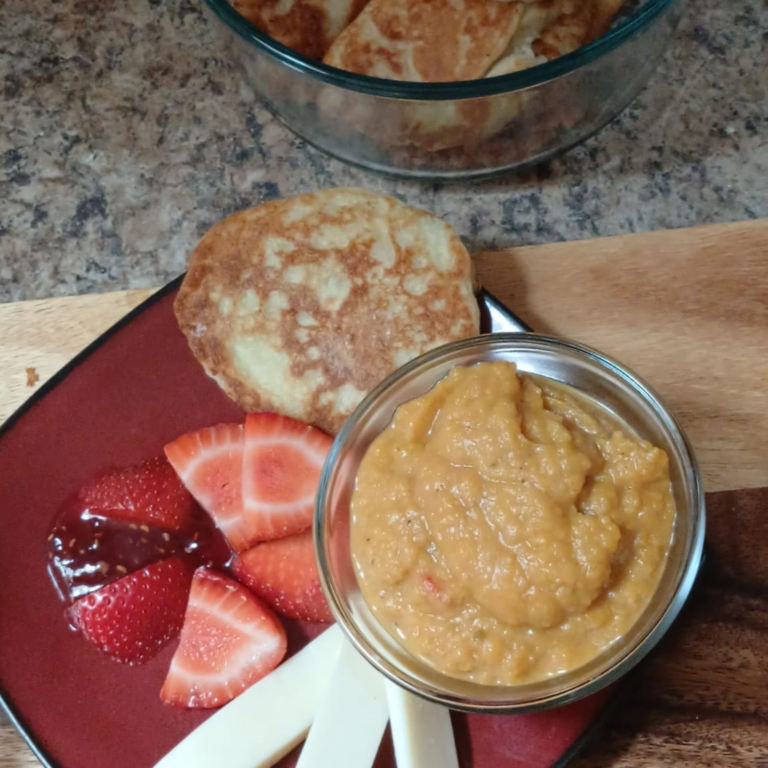
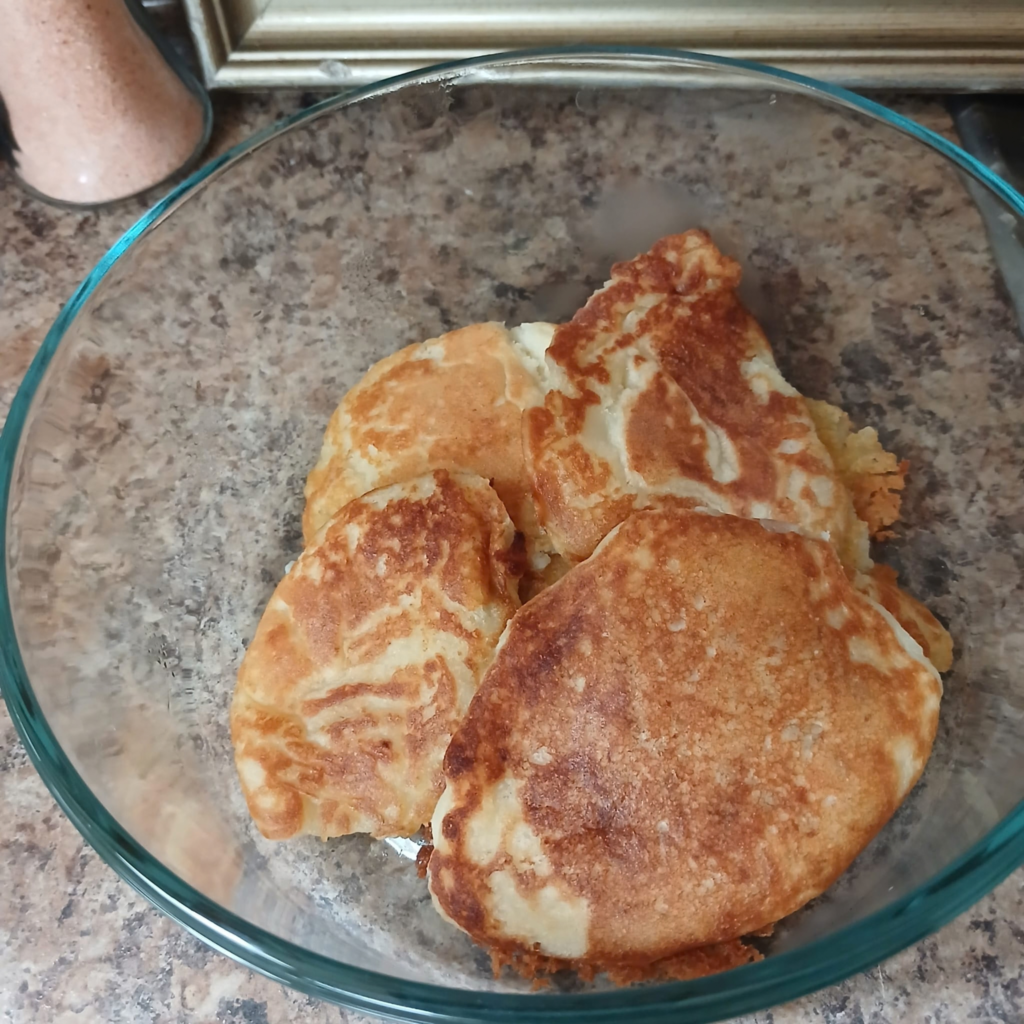
My son only has this dish once a year, so this time I wanted him to try a different version. I made a half batch because it was just for me and him to taste. They disappeared so fast I barely saved him any. Even portioned into little pancakes, they go quickly.
A note on language: You’ll see me use Native, Métis, Indigenous, First Nation (FN), Aboriginal and Indian interchangeably. Many Indigenous people don’t like being called Native, and I use these words where the settlers’ legal language uses them, in our treaties, the Indian Act and the Constitution. My Indigenous professor at U of T always said that if we let them remove the language that gives our Rights what little protection they have, they will eventually remove us too. So I use the settlers’ language where it applies.
So, What Is Bannock?
Bannock is a Scottish dish, and I’m not going to sugarcoat where it came from. King James VI chartered the colony of Nova Scotia in 1621, and France got it back by treaty in 1632. The Scots returned in larger numbers in the 1700s, and the bread came with them.
It is not an Indigenous dish. It is a Scottish dish that Indigenous people adopted, because when we were put onto reserves by the settlers and colonizers of Turtle Island, known today as Canada, our food was rationed. Flour, salt, baking powder, water. That was the meal.
My Indigenous heritage calls it bannock. My Black heritage calls it Johnny bread. Same ingredients, different table. Every nation and every family has its own spin on it.
Content note: the next section talks about residential schools, including abuse and its lasting harm. Read it when you’re ready, or skip ahead to the recipe.
Why Today Matters
I have yet to meet one Indigenous person in Canada who hasn’t been touched by residential schools. A cousin, an aunt, an uncle, a grandparent, a mother, a brother: someone in their family was taken, hurt, or left carrying the aftermath. The only exception I can think of is someone whose entire family is gone, and then they are still affected by that loss. Those schools removed more than 150,000 First Nations, Métis and Inuit children from their families. Residential schools operated between 1831 and 1996. The last one closed less than 30 years ago, and this is not ancient history.
My uncle is a survivor. He is about sixty now, and he was in for a long time. What was done to him there left lasting damage, and he has carried it his whole life never speaking of it. No one does.
That is why Truth and Reconciliation Day exists. It is a day to learn what happened, to tell the truth about it, and to remember the people who are still living with it. Not trying to hide the shame behind it.
What Makes It “Bluenose”?
Mashed potatoes. That is the Nova Scotia twist. Traditional bannock has nothing extra in it, no sweetener and no frills, because it was rationed. The potato turns it into something soft enough that you’d want a second one.
This is not my recipe. The original Bluenose Potato Bannock belongs to my band’s website, so if you want it exactly as written, find the original Bluenose Potato Bannock here. What follows is my version.
What It Does for You
Flour is the backbone of this bread and the reason it was a ration staple. It is a cheap, filling source of energy that kept families going when there was little else.
Mashed potatoes add moisture and a soft, pillowy crumb without eggs. They also bring some potassium and fiber, and they keep the bannock from drying out, even the next day. Leftover mashed potatoes work perfectly.
Baking powder is what lifts this batter with no yeast and no waiting. It is why bannock goes from bowl to plate in minutes.
Buttermilk gives a gentle tang and a tender crumb, and its acidity gives the baking powder extra lift. No buttermilk? Regular milk works fine, and you can make your own (see the recipe notes below).
Butter cut in cold gives the batter a crumbly start, like an apple crumble, and adds richness.
Salt sharpens the flavor of a bread with so few ingredients. Without it, the whole thing tastes flat.
How I Serve It
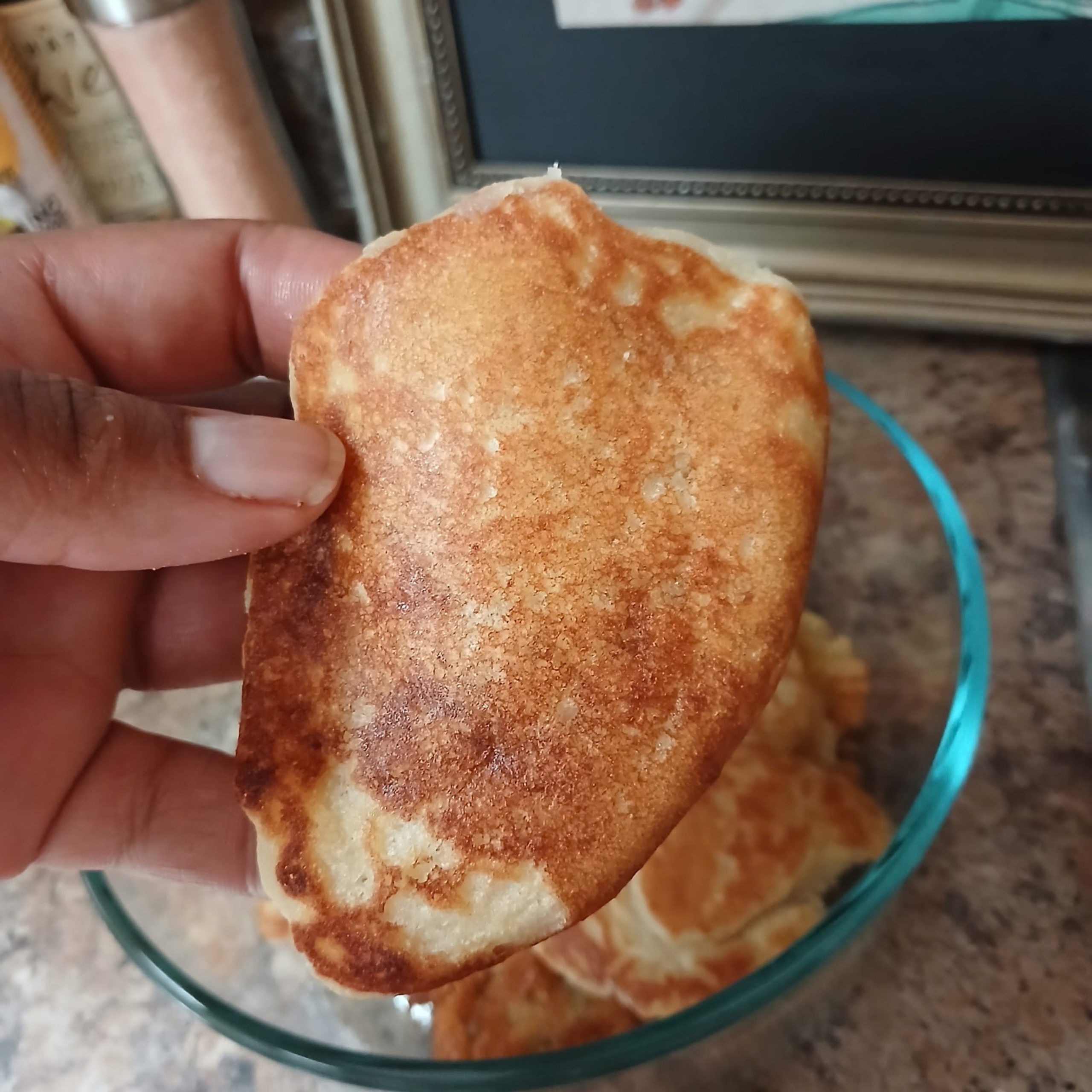
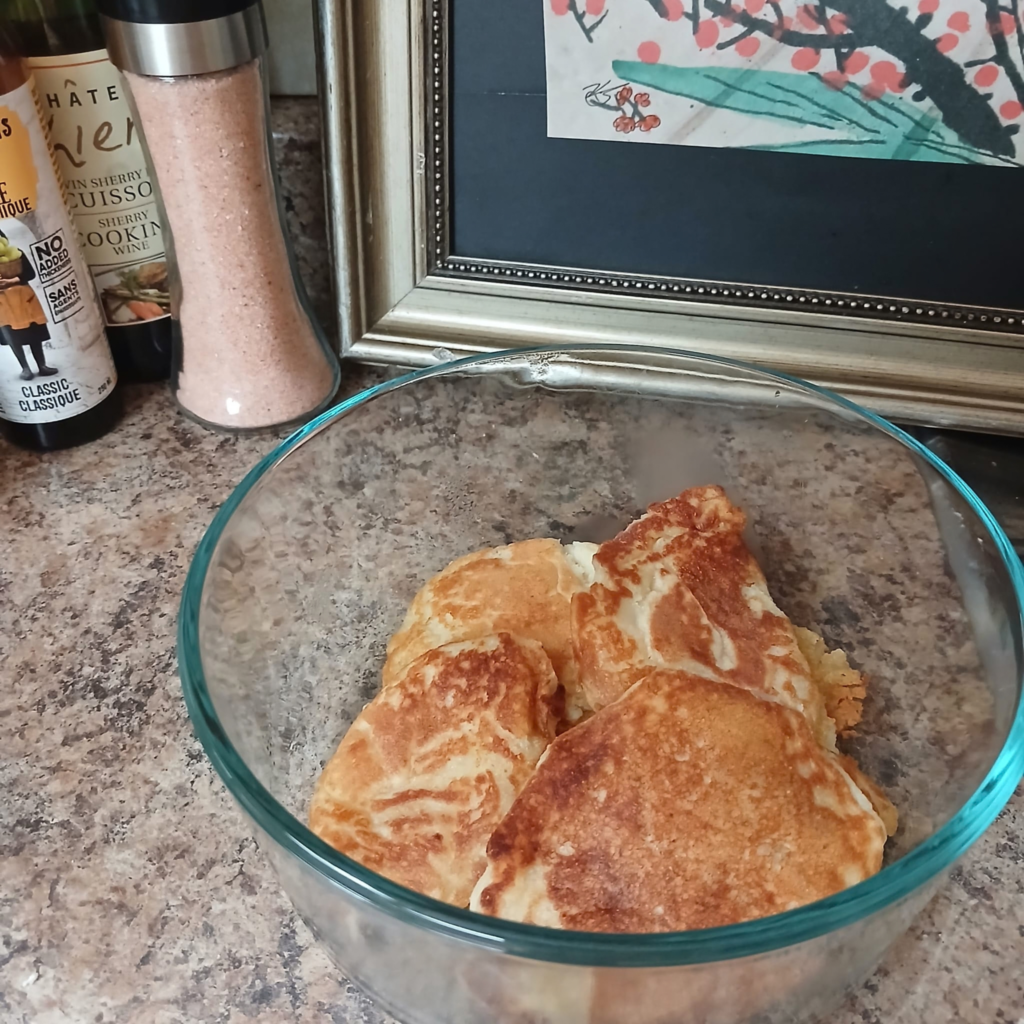
Jam, cheese, or both. You can also fold in blueberries for a sweeter version. I plated mine with strawberries, jam and cheese.

Bluenose Potato Bannock
Ingredients
Equipment
Method
- Mix the flour, salt, baking powder and sugar thoroughly in a bowl.
- Add the cold butter and mix until the texture is crumbly, like an apple crumble topping.
- Add the mashed potatoes and combine.
- Add the buttermilk and water. Use a fork. This is a pancake batter, not bread dough, and the lumps are fine.
- Melt 1 tablespoon butter in a hot skillet with a splash of oil so the butter doesn’t burn.
- Pour in the batter. When bubbles form across the top, flip. Each side takes about 1–2 minutes.
- Oven option: spread the batter in a greased pan and bake at 450°F for 17–22 minutes.
Notes
| Per pancake | 8 pancakes | 9 pancakes | 10 pancakes |
|---|---|---|---|
| Calories | 130 | 115 | 105 |
| Carbohydrates | 20 g | 17 g | 16 g |
| Protein | 2 g | 2 g | 2 g |
| Fat | 5 g | 4 g | 4 g |
| Saturated fat | 3 g | 2 g | 2 g |
| Fiber | 1 g | 1 g | 1 g |
| Sugar | 4 g | 3 g | 3 g |
| Sodium | 375 mg | 330 mg | 300 mg |
My Bluenose Potato Bannock Pancakes
Material you’ll need
Mixing bowl, fork, pan or baking dish (oven safe), measuring cup and/or measuring spoon
My Recipe Makes: 8–10 small bannock pancakes
Ingredients:
- 1 cup + 2 tablespoons flour
- ½ teaspoon salt
- 1 tablespoon baking powder
- 2 tablespoons sugar
- 1 tablespoon + 1 teaspoon cold butter
- ½ cup mashed potatoes
- ¼ cup buttermilk
- ¼ cup water
- 1 tablespoon butter plus a splash of oil, for the pan
Method:
- Mix the flour, salt, baking powder and sugar thoroughly in a bowl.
- Add the cold butter and mix until the texture is crumbly, like an apple crumble topping.
- Add the mashed potatoes and combine.
- Add the buttermilk and water. Use a fork. This is a pancake batter, not bread dough, and the lumps are fine.
- Melt 1 tablespoon butter in a hot skillet with a splash of oil so the butter doesn’t burn.
- Pour in the batter. When bubbles form across the top, flip. Each side takes about 1–2 minutes.
- Oven option: spread the batter in a greased pan and bake at 450°F for 17–22 minutes.
No buttermilk? Use ¼ cup regular milk and ¼ cup water instead. Or make your own: stir 1 tablespoon white vinegar into enough milk to make 1 cup, then let it sit for 5 minutes. For this recipe, that’s ¼ cup milk with about ¾ teaspoon vinegar.
Making it for a crowd? This recipe is a half batch of the original. For more than two or three people, double it, or use the original recipe linked below.
Want the original? Visit my band’s website for the original Bluenose Potato Bannock recipe.
Approximate nutrition (per pancake, based on 9): about 115 calories, 17 g carbohydrates, 2 g protein, 4 g fat (2 g saturated), 1 g fiber, 3 g sugar, 330 mg sodium.
A Pinch of Scripture
Rationed food tells its own story, and so does the hunger that comes after it.
And if thou draw out thy soul to the hungry, and satisfy the afflicted soul; then shall thy light rise in obscurity, and thy darkness be as the noon day. — Isaiah 58:10
I’m not here to sugarcoat anything, and I’m not here to make this day comfortable. I’m here to bring awareness to what residential schools were, what they did to the Indigenous community in Canada, and why we have a day called Truth and Reconciliation. Remembering starts with telling the truth out loud.
Feeding people well matters to me, and there is a scripture that has been weighing on my heart. These are the words Jesus spoke:
For I was an hungred, and ye gave me meat: I was thirsty, and ye gave me drink: I was a stranger, and ye took me in: — Matthew 25:35
Hungry, thirsty, needing somewhere to sleep. Those are not abstract words. Our people were handed rations and expected to make do. Feeding someone well means more than filling their plate. It means seeing them.
Stay faithful, stay seasoned, and stay loyal.
With love and fire,
V.S. Beals
Servant. Disciple. Woman of the Word.
Have you tried one of last week’s dish