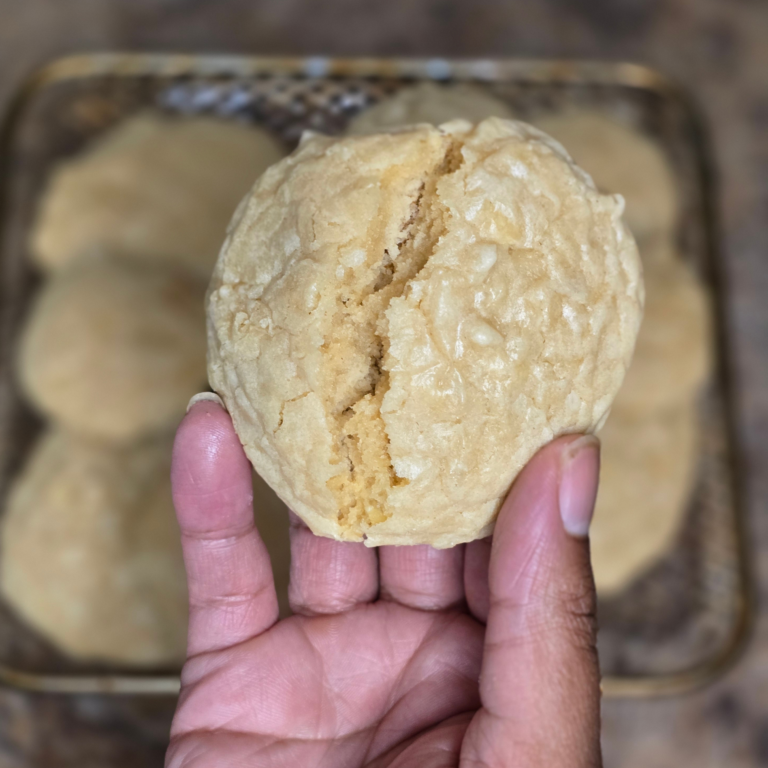
I’ll be honest with you: I’m not really a chocolate person. I know, I know — for a lot of people that sounds almost impossible to believe. But it’s true. Chocolate has just never been my thing… except during that one week a month when God kindly reminds me that I am, in fact, a woman, and suddenly all I want in the world is something sweet.
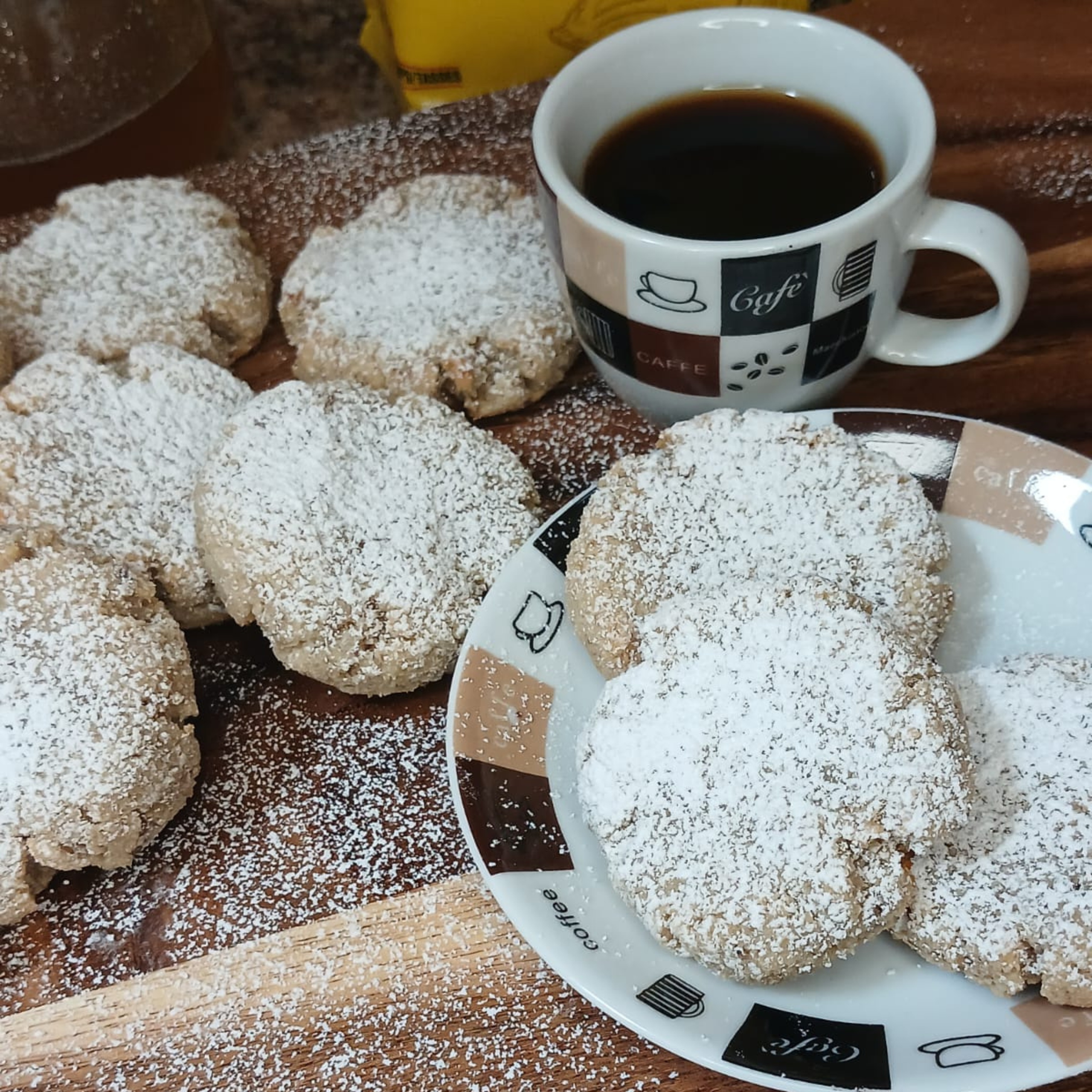
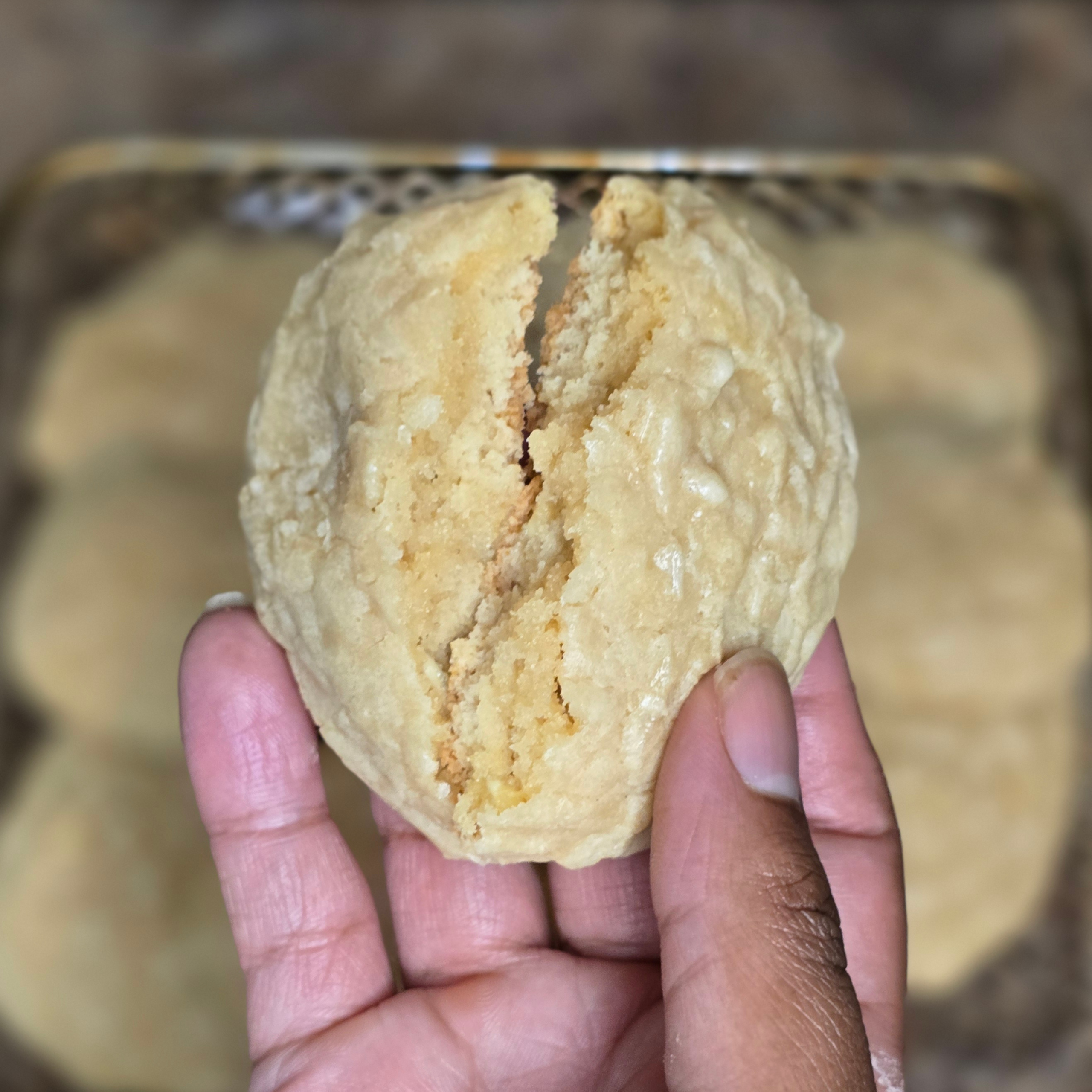
That’s actually how this recipe was born. I didn’t want to run to the store and buy a bag of preservative-loaded, mass-produced cookies just to satisfy a craving. My son, on the other hand, is the opposite of me — he loves chocolate, but only white chocolate. Dark chocolate, milk chocolate, none of it. Believe me, I have tried. So I needed something that worked for both of us: a cookie sweet enough to hit that craving, but balanced enough that it didn’t feel like eating a candy bar. That’s how these chewy, salty-sweet white chocolate chip cookies came to be, and they have earned a permanent spot as my favorite cookie in the world. I don’t buy cookies from the store anymore. I make these. My son and I have to limit ourselves to three a day, because if we don’t, we will absolutely eat the entire batch — and yes, the first time I made them, we did exactly that.

The Best Chewy Salty-Sweet White Chocolate Chip Cookies
Ingredients
Method
- Preheat your oven to 350°F. Do this before you start mixing.
- In a large bowl, whisk together the flour, coarse salt, baking soda, and baking powder until well combined.
- Melt the butter, then stir in the granulated sugar and brown sugar until combined. Add the vanilla extract.
- Whip the eggs, then pour them into the butter-sugar mixture and stir together. Set aside.
- Add the chopped chocolate into the dry ingredient bowl and mix until it’s evenly distributed throughout the flour mixture.
- Sprinkle the cinnamon on top of the chopped chocolate before pouring it into the dry flour mixture.
- Pour the wet mixture into the dry mixture (with the chocolate already in it) and stir until fully incorporated into a doughy consistency.
- Scoop 2-tablespoon portions onto a parchment-lined baking sheet and bake for 11 minutes.
- Do not overbake. The cookies will look slightly underdone on top when they come out — that’s correct. Lift the parchment paper and check the bottom of a cookie; it should be a beautiful golden caramel color.
- Let the cookies rest for 5 minutes before eating.
Notes
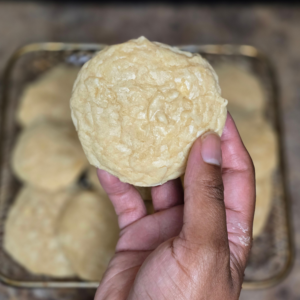
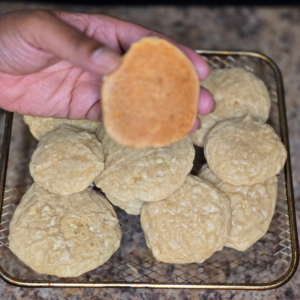 I can not stress this enough. Do NOT overbake — pulling them at 11 minutes while they look slightly raw on top is the key to the chewy texture. This batch makes about 36 cookies using a 2-tablespoon scoop.
To freeze: portion dough, freeze, then let thaw to just-below-room-temp before baking (not tested straight from freezer to oven).
These freeze well. I usually freeze half the batch as portioned dough balls, then let them defrost until just cooler than room temperature before baking. I don’t recommend baking straight from frozen — I haven’t tested it, and the bake time in this recipe assumes thawed dough. If you try it straight from the freezer, let me know how it turns out in the comments.
Baking time can vary slightly depending on your oven and climate. 350°F for 11 minutes is what works consistently for me.
375°F will also work, but the bottoms tend to brown faster at that temperature and the cookies do not come out as chewy.
Nutrition Facts — per serving (2 cookies)
I can not stress this enough. Do NOT overbake — pulling them at 11 minutes while they look slightly raw on top is the key to the chewy texture. This batch makes about 36 cookies using a 2-tablespoon scoop.
To freeze: portion dough, freeze, then let thaw to just-below-room-temp before baking (not tested straight from freezer to oven).
These freeze well. I usually freeze half the batch as portioned dough balls, then let them defrost until just cooler than room temperature before baking. I don’t recommend baking straight from frozen — I haven’t tested it, and the bake time in this recipe assumes thawed dough. If you try it straight from the freezer, let me know how it turns out in the comments.
Baking time can vary slightly depending on your oven and climate. 350°F for 11 minutes is what works consistently for me.
375°F will also work, but the bottoms tend to brown faster at that temperature and the cookies do not come out as chewy.
Nutrition Facts — per serving (2 cookies)
| Calories | ~340 kcal |
| Total Fat | ~15 g |
| Saturated Fat | ~9 g |
| Carbohydrates | ~46 g |
| Sugars | ~31 g |
| Protein | ~3 g |
| Sodium | ~220 mg |
Why the Coarse Salt Matters
Let’s talk about the salt, because this is the detail that makes or breaks this recipe.
It has to be coarse salt. Not fine table salt. This isn’t me being fussy for no reason — it’s the entire point of the cookie. With coarse salt, every single bite gives you one perfect little grain that hits your tongue and does two things at once: it adds its own note of salty flavor, and it actually dials back how sweet the rest of the cookie tastes. That contrast — that little pop of salt against the sweetness of the brown sugar and white chocolate — is what makes this cookie feel balanced instead of cloying. If you swap in fine table salt, the salt disperses evenly through the dough instead of giving you those individual bursts, and you lose that effect completely. You can technically use it — this is your kitchen, you’re the one eating them — but if you want the cookie I’m describing, it has to be coarse. Kosher coarse salt is my go-to, but any coarse salt will get you there.
Why the Mixing Method Matters
I’ve tested this recipe more ways than I can count, and the method I’m giving you below is deliberate. A lot of recipes have you mix your dry ingredients, mix your wet ingredients, then fold your chocolate chips in at the very end. I don’t do that here. Instead, the chopped white chocolate gets mixed into the dry ingredients first — flour, salt, baking soda, baking powder, and chocolate all combined before the wet ingredients ever touch the bowl.
Why does that matter? Because it distributes the chocolate more evenly and consistently throughout the dough, so you’re not stuck with a cookie that has three chocolate chunks in one bite and none in the next. Every single bite gets chocolate. That, combined with the coarse salt, is what gives you that perfect balance in every mouthful — not just on average across the cookie, but in each bite you take.
What You Can and Can’t Substitute
I get asked a lot whether things can be swapped, so let me save you the comment section trip:
- Butter: I’ve made these with vegan butter and they turn out great — barely any difference (just make sure it’s salted).
- Flour: Pastry or cake flour gives the best texture, but all-purpose flour works just fine as a substitute. It won’t change the cookie much.
- Almond/Coconut Flour: It will be a completely different type of cookie
- Sugar: This one is not flexible. It has to be granulated sugar and brown sugar — light or dark brown sugar both work just the same, that part doesn’t matter.
- Vanilla: Has to be vanilla extract (real or artificial).
- Eggs: Two large eggs, and no, I don’t recommend substituting these. This recipe wasn’t built or tested around an egg substitute, so if you swap it and the texture is off, that’s expected — at that point, it’s your recipe, not mine.
- Salt: Can be table salt if that’s what you have, but it will not give you the same result. Coarse is the whole point, as I explained above.
- Cinnamon: Sprinkle on top of the chocolate before dumping it into the flour mixing bowl.
A Word on Balance
Proverbs 25:16 says, “if you find honey, eat just enough.” I think about that verse more than people would probably expect from a cookie recipe, but it’s true here too. Sweetness on its own, without anything to balance it, stops being satisfying — it just becomes too much. That’s exactly what the salt does in this recipe. It’s a small thing that keeps everything else in check. A little goes a long way, and it’s the contrast, not the excess, that makes something actually good.
This cookie is proof that you don’t need a mountain of chocolate to make something feel indulgent — sometimes all it takes is one perfect grain of salt in the right spot. If you make these, I’d love to know how they turned out. Drop a comment below and tell me: did you go with kosher coarse salt, or something else? And if you tried baking them straight from frozen, I especially want to hear about that one.
If this recipe earned a spot in your rotation, save it, pin it, or share it with someone who needs a homemade cookie in their life instead of another bag from the store.
Want recipes like this delivered straight to your inbox? Subscribe to the Kingdom Spread email list below and be the first to know when a new recipe goes live — no algorithm required.
[Subscribe to the Kingdom Spread Newsletter →]
Coming up next on the blog: episode three, recipe three. Stay tuned — and if you haven’t yet, go check out where this all started with recipe one.
Stay faithful, stay seasoned, and stay loyal.
With love and fire,
V.S. Beals
Servant. Disciple. Woman of the Word.