Most writers believe they need to finish their entire book before they can make money. It sounds responsible. It sounds like discipline. In reality, it keeps people stuck—rewriting the same chapters, fixing the same sentences, and waiting for a moment where everything finally feels “ready.” That moment rarely comes. While one writer is still perfecting chapter three, another is getting paid for a skill they chose to develop and use as it is. Creating fight scenes for other writers.
You Don’t Need a Finished Book to Start Making Money
Getting good at something does not mean becoming the best at it. It means becoming useful where you are. If you are even a few steps ahead of someone who is just starting, you already have something to offer. The problem is that most writers do not recognize that their current level is enough to begin. They think value only exists at the finish line, when in reality, value exists anywhere there is a gap between what someone knows and what someone else needs.
Fight scenes are a clear example of this gap. Many writers avoid them altogether, not because they lack creativity, but because they lack experience with conflict. They do not like confrontation in real life, so they struggle to write it on the page. As a result, their scenes feel distant. The movement is unclear, the impact is weak, and the moment passes without consequence. The reader does not feel the hit, and if the reader does not feel it, the scene fails.
If You’ve Felt It, You Can Write It
Grab Your Fighting & Combat Guide Today
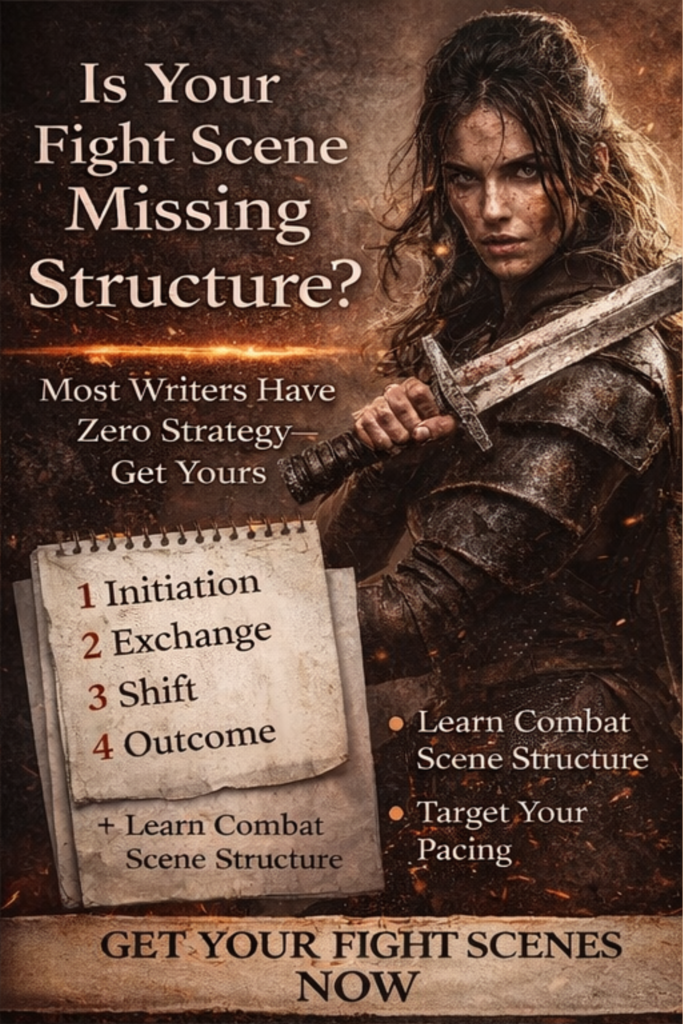
If you have ever experienced physical conflict—even in small ways—you already understand something many writers do not. You know what it feels like when your body reacts before your mind catches up. You know how balance shifts, how pain interrupts movement, and how quickly control can be lost. If you can take that understanding and translate it into writing, you are already operating at a higher level than most. That is not theory. That is lived knowledge turned into skill.
5 Simple Ways to Make Money With Fight Scene Writing
There are practical ways to use that skill immediately, without waiting for a finished manuscript. These are not large, complicated business models. They are direct applications of what you already know:
- Writing custom fight scenes for authors who struggle with action
- Editing weak scenes by strengthening verbs, reactions, and pacing
- Creating small, focused resources such as vocabulary vaults or combat templates
- Ghostwriting action-heavy sections for genres that depend on combat
- Teaching your process through clear, simple breakdowns
Each of these options works because it solves a specific problem. You are not trying to prove that you are an expert. You are demonstrating that you can do something someone else cannot—or does not want to do.
The reason most writers do not make money is not because they lack ability. It is because they hesitate. They wait until their work feels complete. They wait until their confidence catches up. They wait until they feel qualified. In that waiting, nothing is built. Skill improves, but nothing is applied. The difference between a writer who earns and a writer who does not is often not talent—it is movement.
Stewardship: Use What You Already Have
This is where stewardship becomes practical. A skill that is never used does not grow. It does not multiply. It remains exactly where it started. If you have been given the ability to write, then the responsibility is not to hide it until it is perfect. The responsibility is to use it. Not when it feels polished. Not when it feels impressive. When it is usable. Growth comes from application, not delay.
Write Through Experience (Even If It’s Not Yours)
There is also another layer that writers often overlook. Sometimes it is not about what you personally know; it is about what your character knows. If you are writing a character who has been trained to fight, who has taken hits, who understands movement and consequence, then you can write through that lens. Their experience becomes your structure. Their reactions guide the scene. Instead of guessing, you are translating perspective into action.
Writers who learn how to execute fight scenes properly do more than improve their storytelling. They develop a skill that has immediate, practical value. Strengthening verbs, showing reaction, and allowing the moment to shift are not just writing techniques—they are the difference between a scene that exists and a scene that impacts the reader.
Once your writing can create that impact, it is no longer something you are only working on. It becomes something you can use.
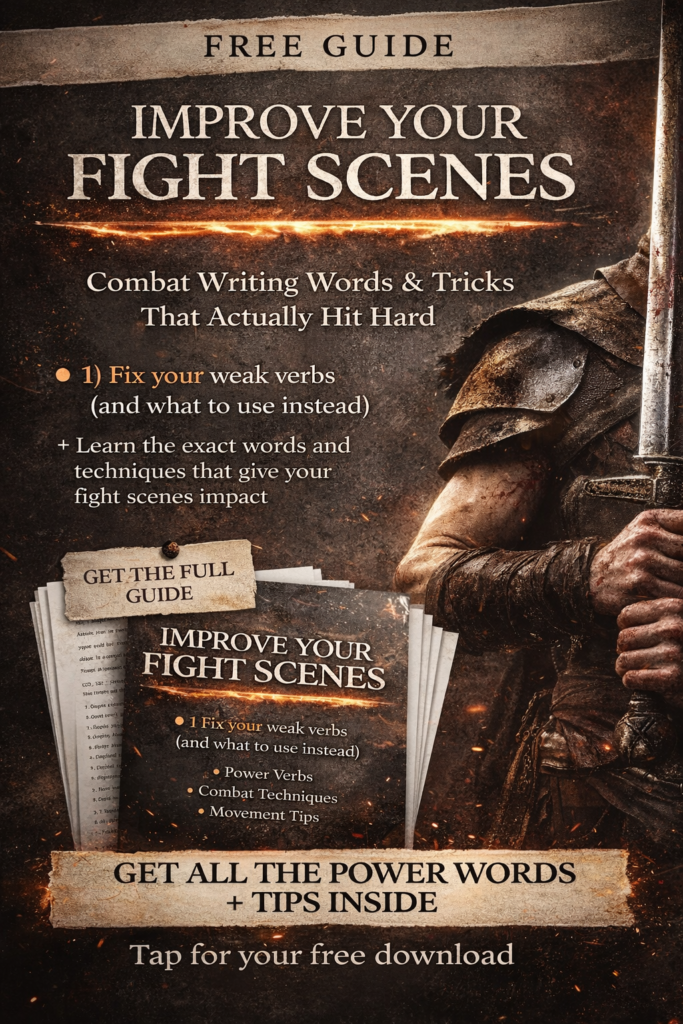
Grab Your 22 Page Guide Today & Get Started
Stay faithful, stay quirky, and stay writing.
With love and fire,
V.S. Beals
Writer. Watchwoman. Woman of the Word.
–> Wait There’s More – If You’re Serious About Writing Check Out All My Free Writing Resources
The Writing Blog

vsbealswrites.com
WriterTok
Follow ME On TikTok